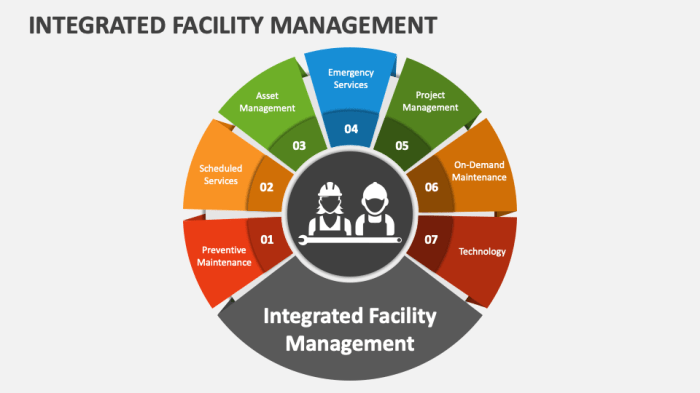
Integrated Facilities Management (IFM) services represent a paradigm shift in how organizations approach the management of their physical assets. Moving beyond siloed approaches to maintenance, security, and operations, IFM adopts a holistic strategy, integrating all aspects of facility management under a single, unified system. This approach streamlines processes, enhances efficiency, and ultimately contributes to significant cost savings and improved operational performance.
This exploration delves into the core components of IFM, its numerous benefits, the key technologies driving its evolution, and the challenges involved in successful implementation.
We will examine real-world case studies showcasing the tangible results achieved through IFM adoption, and finally, we will look towards the future, exploring emerging trends and technological advancements that will continue to shape the landscape of facility management. The goal is to provide a comprehensive understanding of IFM, its potential, and its role in optimizing organizational success.
Benefits of Integrated Facilities Management Services
Integrated Facilities Management (IFM) offers a holistic approach to managing all aspects of a building or campus, leading to significant improvements across various operational areas. By consolidating various services under a single provider, organizations can realize substantial cost savings, increased efficiency, and enhanced risk mitigation. This unified approach streamlines processes, improves communication, and ultimately contributes to a more productive and sustainable work environment.
Cost Savings through Integrated Facilities Management
IFM significantly reduces operational costs by eliminating redundancies and inefficiencies inherent in managing multiple separate service contracts. A single provider can negotiate better rates with suppliers, optimize resource allocation, and implement streamlined processes. For instance, a company managing its cleaning, security, and maintenance separately might experience higher costs due to overlapping responsibilities and individual contract negotiations. Consolidating these under an IFM provider allows for economies of scale, leading to potential savings of 15-20% or more depending on the size and complexity of the facilities.
This also minimizes administrative overhead, as a single point of contact simplifies billing, reporting, and communication.
Efficiency and Productivity Improvements
IFM fosters a more efficient and productive work environment through improved coordination and communication among service providers. A unified system ensures seamless integration of services, reducing downtime and improving response times to issues. For example, if a maintenance issue arises, the IFM provider can quickly coordinate with the cleaning and security teams to minimize disruption and ensure safety. This streamlined approach leads to increased operational efficiency, allowing employees to focus on their core responsibilities rather than managing various service providers.
Furthermore, data-driven insights provided by IFM providers can help identify areas for improvement and optimize resource allocation for maximum efficiency.
Enhanced Risk Management Capabilities
IFM enhances risk management by providing a centralized point of responsibility for all facility-related risks. The provider develops comprehensive risk assessments, implements preventative measures, and ensures compliance with relevant regulations. This proactive approach reduces the likelihood of incidents and minimizes potential liabilities. For example, a comprehensive risk assessment might identify potential fire hazards, leading to the implementation of improved fire safety protocols and regular inspections.
In the event of an incident, the IFM provider coordinates the response, ensuring a swift and effective resolution, minimizing disruption and potential financial losses.
Workplace Safety and Environmental Sustainability Improvements
Effective IFM contributes significantly to a safer and more sustainable workplace.
- Improved safety protocols and training programs for all facility staff, reducing workplace accidents and injuries.
- Regular inspections and maintenance to identify and address potential hazards, minimizing the risk of incidents.
- Implementation of energy-efficient technologies and practices, reducing energy consumption and carbon footprint.
- Waste reduction and recycling programs to minimize environmental impact.
- Sustainable procurement practices, prioritizing environmentally friendly products and services.
- Improved indoor air quality through regular maintenance and air filtration systems, promoting employee health and well-being.
Key Technologies in Integrated Facilities Management
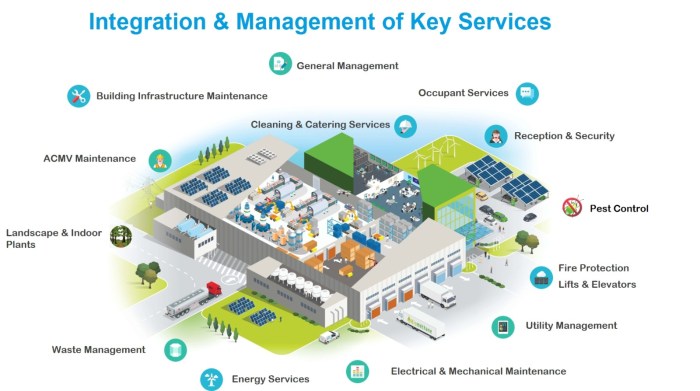
Integrated Facilities Management (IFM) leverages a suite of advanced technologies to optimize building operations, enhance efficiency, and improve overall asset performance. These technologies range from simple software applications to sophisticated data analytics platforms, all working together to provide a holistic view of the facility and its needs. Effective implementation of these technologies is crucial for achieving the benefits of IFM.
The digital transformation of facilities management is driven by the need for improved data collection, analysis, and response. This allows for proactive maintenance, optimized resource allocation, and a better understanding of the overall operational costs and efficiency. The convergence of various technologies allows for a more integrated and streamlined approach to managing facilities, ultimately leading to significant cost savings and improved tenant satisfaction.
Software Solutions for Facility Management
Several software solutions cater to the diverse needs of IFM. These range from Computerized Maintenance Management Systems (CMMS) to Building Information Modeling (BIM) software and sophisticated Integrated Workplace Management Systems (IWMS). CMMS primarily focuses on maintenance scheduling, work order management, and asset tracking. BIM, on the other hand, provides a 3D model of the building, enabling better visualization and planning for maintenance and renovations.
IWMS integrates various aspects of facility management, including space management, maintenance, and lease administration, providing a centralized platform for managing all facility-related data. The choice of software depends on the specific needs and size of the organization. A smaller facility might benefit from a simpler CMMS, while a large corporate campus might require a comprehensive IWMS.
Data Analytics and Improved Decision-Making
Data analytics plays a pivotal role in transforming raw data into actionable insights for improved decision-making in facilities management. By analyzing data from various sources, including CMMS, building sensors, and energy meters, facilities managers can identify patterns, predict potential issues, and optimize resource allocation. For example, analyzing energy consumption data can reveal areas where energy efficiency improvements can be made, leading to cost savings.
Predictive maintenance, enabled by analyzing equipment performance data, allows for proactive maintenance, preventing costly breakdowns and ensuring operational continuity. This data-driven approach moves facilities management from a reactive to a proactive model, significantly improving efficiency and reducing operational costs. For instance, a retail chain using predictive analytics might anticipate HVAC failures in stores based on historical data and weather patterns, scheduling preventative maintenance to avoid disruptions during peak shopping seasons.
Technologies and Their Applications in Integrated Facilities Management
| Technology | Application | Benefits | Example |
|---|---|---|---|
| Computerized Maintenance Management Systems (CMMS) | Work order management, preventative maintenance scheduling, asset tracking | Reduced downtime, improved maintenance efficiency, extended asset lifespan | Tracking HVAC system maintenance schedules and automatically generating work orders when maintenance is due. |
| Building Information Modeling (BIM) | 3D modeling of building assets, space planning, clash detection, facility lifecycle management | Improved design coordination, reduced construction costs, enhanced facility understanding | Using BIM to visualize potential plumbing conflicts during a renovation project. |
| Internet of Things (IoT) Sensors | Real-time monitoring of environmental conditions (temperature, humidity, air quality), equipment performance, energy consumption | Improved energy efficiency, proactive maintenance, enhanced occupant comfort | Monitoring temperature and humidity levels in a server room to prevent equipment failure. |
| Integrated Workplace Management Systems (IWMS) | Centralized platform for managing all facility-related data, including space management, maintenance, and lease administration | Improved efficiency, reduced costs, better decision-making | Using IWMS to optimize space utilization by tracking occupancy levels and adjusting space allocation accordingly. |
Challenges in Implementing Integrated Facilities Management
Implementing an integrated facilities management (IFM) system, while offering significant long-term benefits, presents several hurdles that organizations must carefully consider and proactively address. Successful implementation requires a strategic approach that anticipates and mitigates these challenges to ensure a smooth transition and maximize the return on investment. Failing to do so can lead to project delays, cost overruns, and ultimately, a system that fails to deliver on its promised efficiencies.
Integrating Different Facilities Management Systems
The integration of disparate systems, each with its own data structures, protocols, and interfaces, is a major challenge. Legacy systems often lack the interoperability needed to seamlessly exchange information with newer, more advanced platforms. This necessitates significant effort in data migration, system customization, and the development of robust interfaces to ensure compatibility. For example, an organization might have separate systems for HVAC control, security, and maintenance scheduling.
Integrating these systems requires careful planning, potentially involving custom software development or the selection of a specialized integration platform that can handle the complexities of data translation and synchronization. The process is further complicated by the potential need for data cleansing and standardization to ensure data accuracy and consistency across the integrated system.
Data Security and Privacy in a Unified System
The consolidation of facility data into a unified system raises significant concerns regarding data security and privacy. A single point of failure could expose sensitive information, such as building blueprints, access control details, and maintenance records, to unauthorized access or cyberattacks. Complying with relevant data protection regulations, such as GDPR or CCPA, becomes paramount. This necessitates robust security measures, including encryption, access controls, and regular security audits.
Furthermore, a comprehensive data governance framework must be established to ensure data integrity, confidentiality, and availability. For example, access to sensitive data should be restricted to authorized personnel only, with detailed audit trails maintained to track all data access and modifications.
Overcoming Resistance to Change Among Employees
Implementing IFM often involves significant changes to workflows and responsibilities. Employees accustomed to existing systems and processes may resist adopting new technologies and methods. This resistance can manifest as decreased productivity, lack of cooperation, and even sabotage. Strategies to overcome this resistance include comprehensive training programs, clear communication of the benefits of IFM, and active engagement of employees throughout the implementation process.
Providing opportunities for feedback and addressing concerns promptly can foster a sense of ownership and buy-in. Furthermore, recognizing and rewarding early adopters can help encourage broader acceptance of the new system.
Effective Communication and Collaboration
Successful IFM implementation relies heavily on effective communication and collaboration among all stakeholders, including IT, facilities management personnel, vendors, and senior management. Open communication channels are crucial for addressing concerns, resolving conflicts, and ensuring everyone is aligned on project goals and timelines. Regular meetings, progress reports, and feedback mechanisms can help maintain transparency and build consensus. Furthermore, establishing a dedicated project team with clearly defined roles and responsibilities can streamline the implementation process and facilitate effective collaboration.
For instance, a weekly project status meeting involving all key stakeholders can ensure everyone is informed of progress, challenges, and upcoming milestones.
Facilities Management: A Broader Perspective
Effective facilities management (FM) plays a crucial role in ensuring the smooth and efficient operation of any organization, regardless of size or industry. It goes beyond simply maintaining buildings; it’s about optimizing the entire built environment to support business objectives and enhance the overall experience of occupants. The ultimate aim is to create a productive, safe, and sustainable workplace.Facilities management strategies are multifaceted and tailored to specific organizational needs.
Effective FM strives to balance cost-effectiveness with the provision of high-quality services, always prioritizing occupant satisfaction and operational efficiency.
Overall Goals and Objectives of Effective Facilities Management
The primary goals of effective FM are to maximize the value of an organization’s assets, optimize operational efficiency, and ensure a safe and productive environment for occupants. This involves proactive maintenance to prevent costly breakdowns, strategic planning for future needs, and the implementation of sustainable practices to minimize environmental impact. Specific objectives often include cost reduction, improved space utilization, enhanced occupant satisfaction, risk mitigation, and compliance with relevant regulations.
For example, a well-managed FM program can reduce energy consumption through optimized HVAC systems, leading to significant cost savings and a smaller carbon footprint.
Examples of Facilities Management Strategies for Various Organizational Contexts
Facilities management strategies vary greatly depending on the organization’s size, type, and specific needs. A large multinational corporation might employ a sophisticated integrated FM system encompassing multiple technologies and service providers, while a small business might rely on a more streamlined approach with in-house personnel. For instance, a hospital’s FM strategy would prioritize hygiene and infection control, while a manufacturing facility would focus on maintaining complex machinery and ensuring safety protocols are rigorously followed.
A university’s FM would focus on managing diverse building types (classrooms, labs, residential halls) and balancing the needs of students, faculty, and staff.
The Role of Facilities Management in Supporting Business Operations and Strategic Goals
Facilities management is not a separate entity; it’s integral to an organization’s success. Effective FM directly supports business operations by ensuring the availability and functionality of essential infrastructure, equipment, and services. This allows employees to focus on their core tasks, leading to increased productivity and profitability. Furthermore, FM contributes to strategic goals by enabling business expansion, improving workplace culture, and fostering a sustainable and environmentally responsible approach.
For example, a well-designed workspace can boost employee morale and collaboration, directly impacting productivity and innovation. Strategic FM planning can also ensure the organization has the necessary space to accommodate growth and changing business needs.
Organizational Structure and Responsibilities of a Typical Facilities Management Department
The organizational structure of a facilities management department can vary depending on the organization’s size and complexity, but typically includes several key roles and responsibilities. A common structure might include a director or manager overseeing several departments: a maintenance department responsible for repairs and preventative maintenance; a space management department responsible for allocation and utilization of space; a sustainability department focused on environmental impact reduction; and an administrative department managing budgets, contracts, and reporting.
Each department has specific responsibilities and key performance indicators (KPIs) to track their effectiveness. For example, the maintenance department’s KPIs might include the number of maintenance requests resolved within a certain timeframe and the percentage of preventative maintenance tasks completed. The space management department’s KPIs might include space utilization rates and the efficiency of space allocation. The entire department works collaboratively to ensure the smooth functioning of the organization’s facilities.
Case Studies of Successful Integrated Facilities Management Implementations
The successful implementation of Integrated Facilities Management (IFM) requires a strategic approach, careful planning, and a commitment to leveraging technology. Examining real-world examples reveals valuable insights into the challenges encountered and the strategies employed to achieve positive outcomes. This section presents two case studies illustrating the practical application of IFM and its impact on organizational efficiency and cost-effectiveness.
Case Study 1: Johnson Controls’ IFM Implementation for a Large Healthcare System
Johnson Controls, a global leader in IFM, partnered with a large healthcare system to implement a comprehensive IFM program. The healthcare system faced challenges including fragmented facility management operations, high energy consumption, and difficulties in tracking maintenance activities. To address these issues, Johnson Controls implemented a centralized IFM platform integrating various systems, including building automation, maintenance management, and energy monitoring.
This involved consolidating multiple service providers, implementing a robust CMMS (Computerized Maintenance Management System), and deploying smart sensors to monitor energy usage in real-time.The implementation involved significant upfront investment in technology and training, as well as overcoming initial resistance from some staff accustomed to traditional methods. However, the positive outcomes were substantial. The healthcare system experienced a 15% reduction in energy costs, a 20% improvement in maintenance response times, and a 10% decrease in overall facility operating costs within two years.
The centralized platform also provided improved data visibility, enabling proactive maintenance and predictive analytics.
Case Study 2: A University’s Implementation of IFM for Enhanced Sustainability
A large university implemented an IFM strategy to improve sustainability and reduce its environmental footprint. The university initially struggled with inconsistent waste management practices, inefficient energy use across various buildings, and a lack of coordinated sustainability initiatives. Their IFM solution involved the implementation of a smart building management system, integrating energy monitoring, waste management tracking, and building automation systems.
The system also incorporated data analytics to identify areas for improvement and track progress toward sustainability goals.The project faced challenges in integrating legacy systems and obtaining buy-in from various departments with different priorities. However, the university successfully addressed these by establishing a cross-functional team to oversee the implementation and by providing comprehensive training to staff. The results included a 12% reduction in energy consumption, a 15% decrease in waste generation, and a significant improvement in the university’s overall sustainability performance.
This led to cost savings, enhanced campus image, and improved compliance with environmental regulations.
Comparative Analysis of Case Studies
| Feature | Johnson Controls Healthcare System | University IFM Implementation |
|---|---|---|
| Primary Goal | Cost reduction and improved efficiency | Sustainability and environmental impact reduction |
| Key Challenges | System integration, staff resistance, upfront investment | Legacy system integration, departmental buy-in, data integration |
| Solutions Implemented | Centralized IFM platform, CMMS, smart sensors | Smart building management system, data analytics, cross-functional team |
| Measurable Improvements | 15% energy cost reduction, 20% improved maintenance response, 10% reduced operating costs | 12% energy consumption reduction, 15% waste reduction, improved sustainability performance |
| Lessons Learned | Strong leadership, comprehensive training, phased implementation crucial | Cross-functional collaboration, clear communication, data-driven decision making essential |
In conclusion, the transition to integrated facilities management offers a compelling pathway toward operational excellence and significant long-term gains. By strategically integrating various services, leveraging advanced technologies, and addressing potential challenges proactively, organizations can unlock substantial cost savings, enhance efficiency, improve risk management, and create a more sustainable and productive work environment. The successful implementation of IFM demands a commitment to holistic planning, effective communication, and a data-driven approach to decision-making, ultimately leading to a more streamlined and efficient operation for the future.
Q&A
What is the difference between traditional and integrated facilities management?
Traditional FM handles services separately (e.g., cleaning, repairs), leading to inefficiencies. IFM integrates these services for better coordination and cost savings.
How much does IFM typically cost?
IFM costs vary widely based on the size and needs of the organization. It often involves an initial investment in technology and integration but can lead to long-term cost reductions.
What are the key performance indicators (KPIs) used to measure IFM success?
KPIs include cost reduction, improved efficiency, enhanced employee satisfaction, reduced risk, and improved sustainability metrics.
What type of organization is best suited for IFM?
Organizations with complex facilities, multiple locations, or a need for enhanced operational efficiency often benefit most from IFM. However, any organization seeking to optimize its facilities management can benefit.


