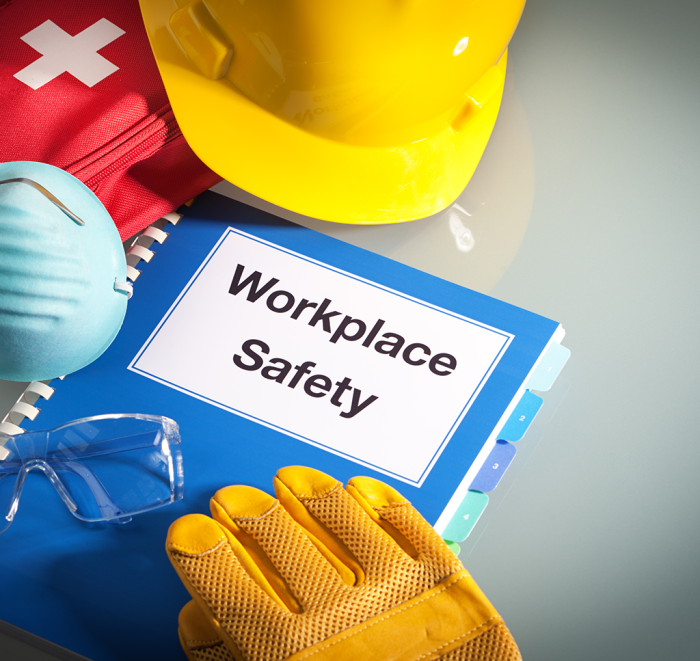
Workplace health and safety in facilities management is paramount, impacting not only legal compliance but also employee well-being and organizational productivity. This multifaceted field encompasses risk assessment, emergency preparedness, training programs, and technological integration to create a secure and healthy environment across diverse facility types. From bustling office complexes to intricate hospital settings, the principles remain consistent: proactive risk mitigation, effective communication, and a culture prioritizing safety.
This exploration delves into the intricacies of establishing and maintaining a safe workplace, examining legal responsibilities, best practices for hazard identification and control, and the crucial role of technology in enhancing safety protocols. We will also consider the influence of environmental factors and the importance of cultivating a robust safety culture where employee participation is actively encouraged.
Defining Workplace Health and Safety in Facilities Management
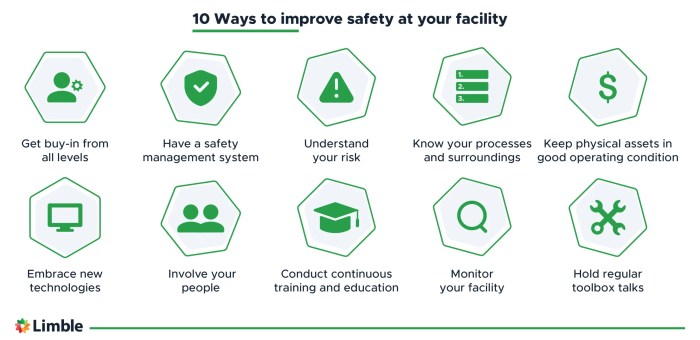
Workplace health and safety (WHS) in facilities management encompasses the proactive identification, assessment, and control of risks to the health, safety, and well-being of all individuals within a facility. This includes employees, contractors, visitors, and even the surrounding community where applicable. Effective WHS management is crucial for maintaining a productive and ethical work environment, minimizing legal liabilities, and fostering a positive organizational culture.Facilities managers have a broad scope of responsibility when it comes to WHS.
Their role extends beyond simply complying with regulations; it involves creating a culture of safety and proactively anticipating potential hazards. This requires a comprehensive understanding of the specific risks associated with the type of facility they manage, as well as the relevant legislation and best practices.
Legal and Ethical Responsibilities of Facilities Managers Regarding Safety
Facilities managers bear significant legal and ethical responsibilities for ensuring a safe working environment. Legally, they are often held accountable for complying with all applicable WHS legislation, which varies by jurisdiction but generally includes requirements for risk assessments, hazard control, emergency preparedness, and record-keeping. Ethical responsibilities include a commitment to protecting the health and well-being of all individuals within the facility, fostering open communication about safety concerns, and providing adequate training and resources to prevent accidents and injuries.
Failure to meet these responsibilities can lead to significant legal penalties, reputational damage, and, most importantly, preventable harm to individuals.
Common Workplace Hazards in Various Facility Types
The types of hazards encountered in facilities management vary significantly depending on the nature of the facility.
For example, office buildings may present risks such as slips, trips, and falls due to uneven flooring or cluttered walkways, ergonomic issues related to prolonged computer use, and fire hazards from faulty electrical equipment. Hospitals face unique challenges, including exposure to infectious diseases, hazardous materials (e.g., cleaning chemicals, medical waste), and the risk of workplace violence. Manufacturing plants present a wide range of potential hazards, such as machinery-related injuries, exposure to hazardous chemicals and substances, and risks associated with heavy lifting or repetitive movements.
Other facility types, such as schools, retail spaces, and transportation hubs, also have their own specific health and safety considerations. A comprehensive WHS program must account for the unique characteristics of each facility and the potential hazards present within it.
Comparison of Health and Safety Regulations Across Different Geographical Locations
Health and safety regulations vary considerably across different countries and regions. For instance, the Occupational Safety and Health Administration (OSHA) in the United States has a different regulatory framework than the Health and Safety Executive (HSE) in the United Kingdom or the equivalent agencies in other nations. These differences can include variations in specific regulations, enforcement mechanisms, and penalties for non-compliance.
Facilities managers operating internationally or managing multi-national facilities must be aware of and comply with the relevant regulations in each jurisdiction. This often requires specialized training and expertise to navigate the complexities of international WHS standards. Failure to do so can result in significant legal and financial repercussions.
Risk Assessment and Management in Facilities
Effective risk assessment and management are crucial for maintaining a safe and productive workplace in facilities management. A proactive approach, identifying and mitigating potential hazards before they cause incidents, is paramount to protecting both employees and building occupants. This section Artikels a systematic process for conducting risk assessments, creating a sample risk assessment form, and developing strategies for mitigating identified risks.
Systematic Risk Assessment Process
A systematic approach to risk assessment ensures thoroughness and consistency. This process typically involves five key steps: identifying hazards, analyzing risks, evaluating risks, implementing controls, and monitoring and reviewing. First, hazards are identified through observation, inspections, incident reports, and consultation with staff. Then, each hazard is analyzed to determine its potential severity and likelihood of occurrence. The risk is evaluated by combining severity and likelihood, often using a matrix to categorize risks as low, medium, or high.
Appropriate control measures are then implemented to reduce or eliminate the risk. Finally, the effectiveness of the controls is monitored and the assessment is reviewed periodically to ensure its ongoing relevance and accuracy.
Sample Risk Assessment Form for a School
The following is a sample risk assessment form designed for a school environment. It’s crucial to remember that this is a template and should be adapted to the specific circumstances of each school.
| Hazard | Location | Severity (1-5, 5 being most severe) | Likelihood (1-5, 5 being most likely) | Risk Level (Severity x Likelihood) | Control Measures | Responsible Person | Review Date |
|---|---|---|---|---|---|---|---|
| Tripping hazard on uneven pavement | Playground | 4 | 3 | 12 (High) | Repair or replace pavement; install warning signs | Head Groundskeeper | 2024-06-30 |
| Slippery floors in gymnasium | Gymnasium | 3 | 4 | 12 (High) | Regular cleaning; use non-slip floor polish; provide absorbent mats | Gymnasium Supervisor | 2024-07-15 |
| Fire hazard in classrooms | Classrooms | 5 | 2 | 10 (High) | Regular fire drills; ensure fire extinguishers are serviced and accessible; implement fire safety training | School Principal | 2024-08-15 |
| Playground equipment damage | Playground | 3 | 3 | 9 (Medium) | Regular inspections; timely repairs; enforce safe usage guidelines | Head Groundskeeper | 2024-06-15 |
Risk Mitigation Strategies and Prioritization
Prioritizing risk mitigation is essential, focusing resources on the most significant threats. A common approach involves using a risk matrix, plotting severity against likelihood. High-risk hazards (high severity and high likelihood) require immediate attention and implementation of robust control measures. Medium-risk hazards require implementation of control measures, while low-risk hazards may only require monitoring. For example, in the school scenario, addressing the fire hazard (high risk) takes precedence over repairing minor playground equipment damage (medium risk).
Implementing and Monitoring Risk Mitigation Strategies
Implementation involves assigning responsibilities, setting deadlines, and allocating resources. Regular monitoring is critical to ensure that control measures remain effective. This can involve regular inspections, audits, and reviews of the risk assessment itself. For example, the school might schedule regular inspections of fire extinguishers and conduct fire drills to monitor the effectiveness of fire safety measures. A system for recording and analyzing near misses and incidents is also crucial for identifying areas where improvements are needed and for updating the risk assessment accordingly.
This iterative process ensures the ongoing effectiveness of the risk management program.
Emergency Preparedness and Response
A comprehensive emergency response plan is crucial for the safety and well-being of occupants and the protection of a large office building’s assets. Such a plan should account for a range of potential emergencies, ensuring a swift and organized response to minimize disruption and potential harm. Effective communication and training are key components in the successful implementation of any emergency plan.
Elements of a Comprehensive Emergency Response Plan
A robust emergency response plan for a large office building should include several key elements. First, a detailed assessment of potential hazards is essential. This involves identifying risks specific to the building, such as fire, earthquake, flood, power outages, and active shooter situations. Next, the plan must Artikel clear procedures for each identified hazard, including evacuation routes, assembly points, and communication protocols.
Designated roles and responsibilities for staff members, including emergency response teams, should be clearly defined and regularly reviewed. Furthermore, the plan should detail procedures for securing the building, accounting for disabled individuals, and coordinating with emergency services. Finally, regular testing and updates of the plan are vital to ensure its effectiveness and relevance. This includes conducting drills and reviewing the plan in light of any changes in building operations or identified vulnerabilities.
Emergency Communication and Evacuation Procedures
Effective communication is paramount during an emergency. The building should have a multi-faceted communication system in place, including public address systems, text alerts, email notifications, and potentially even a dedicated emergency communication app. Clear and concise messaging is vital; messages should be easy to understand and provide specific instructions. Evacuation procedures must be clearly marked and regularly practiced.
Signage should be visible, easily understood, and consistently located throughout the building. Designated evacuation routes should be free from obstructions, and staff should be trained to guide occupants to safety. Assembly points should be clearly marked and easily accessible, allowing for a quick headcount after evacuation. Regular drills and training ensure staff are familiar with these procedures.
Emergency Drills and Training Programs
Regular emergency drills are indispensable for effective emergency preparedness. Drills should simulate various emergency scenarios, including fire, earthquake, and active shooter situations. These drills allow staff to practice evacuation procedures, test communication systems, and identify any weaknesses in the emergency response plan. Training programs should cover a range of topics, including first aid, CPR, fire safety, and the proper use of emergency equipment.
Training should be tailored to the specific needs of the building and the roles of individual staff members. Regular refresher training is crucial to maintain competency and ensure everyone remains up-to-date on emergency procedures. Documentation of training and drill participation should be maintained for compliance and accountability.
Emergency Situation Response Protocols
| Emergency Situation | Response Protocol | Responsible Party | Communication Method |
|---|---|---|---|
| Fire | Activate fire alarm, evacuate building using designated routes, assemble at designated points, contact emergency services. | Building Security, Fire Wardens | Public address system, text alerts, building-wide email |
| Earthquake | “Drop, Cover, and Hold On,” evacuate once shaking stops, check for injuries, assemble at designated points, contact emergency services. | Building Security, First Aid Responders | Public address system, text alerts |
| Active Shooter | Follow “Run, Hide, Fight” protocol; evacuate if possible, if unable to evacuate, find a secure location and remain silent, if confronted, fight back as a last resort. Contact emergency services immediately. | Building Security, Emergency Response Team | Text alerts, dedicated emergency communication system |
| Power Outage | Activate backup power systems, ensure lighting and emergency exits are illuminated, assess potential hazards, communicate with occupants, contact utility providers. | Facilities Management, Building Engineer | Public address system, text alerts, email |
Ultimately, ensuring workplace health and safety in facilities management requires a holistic approach. It demands a commitment to proactive risk assessment, comprehensive emergency planning, robust training programs, and the strategic integration of technology. By fostering a culture of safety, prioritizing employee well-being, and continuously adapting to evolving best practices, facilities managers can significantly reduce risks, improve operational efficiency, and cultivate a productive and secure environment for all.
FAQ Explained
What are the most common causes of workplace accidents in facilities?
Common causes include slips, trips, and falls; improper handling of materials; inadequate machine guarding; and exposure to hazardous substances.
How often should emergency drills be conducted?
Frequency depends on the facility type and potential hazards, but regular drills (at least annually) are recommended, with more frequent practice for high-risk scenarios.
What are some key performance indicators (KPIs) for workplace safety?
KPIs include incident rates (lost time, recordable), near-miss reporting rates, training completion rates, and employee safety survey results.
How can I encourage employee participation in safety initiatives?
Create a safe reporting environment, involve employees in risk assessments, recognize and reward safe behavior, and provide regular feedback and communication.
What is the role of a facilities manager in workplace safety?
Facilities managers are responsible for implementing and maintaining safety programs, conducting risk assessments, ensuring compliance with regulations, and providing a safe working environment.


