Corporate sustainability is no longer a niche concept; it’s a critical component of long-term business success. Integrating sustainable practices throughout an organization requires a multifaceted approach, and facilities management plays a pivotal role. From optimizing energy consumption and implementing robust recycling programs to engaging employees in environmentally conscious behaviors, facilities management directly impacts a company’s environmental footprint and its commitment to social responsibility.
This exploration delves into the multifaceted ways facilities management contributes to a company’s sustainability goals. We will examine key strategies, technological advancements, and the crucial role of employee engagement in creating a truly sustainable corporate environment. By understanding the interplay between facilities management and corporate sustainability, organizations can achieve significant environmental and economic benefits while enhancing their brand reputation.
Defining Corporate Sustainability and its Interrelation with Facilities Management
Corporate sustainability is a multifaceted concept encompassing environmental, social, and economic considerations. It’s about creating long-term value by integrating these three pillars into business strategy and operations. This holistic approach aims to minimize negative impacts and maximize positive contributions to society and the planet, ensuring the business’s viability for future generations. Facilities management plays a crucial role in achieving these goals, as it directly manages a significant portion of a company’s environmental footprint and operational efficiency.Facilities management contributes significantly to achieving corporate sustainability objectives by directly influencing resource consumption, waste generation, and operational efficiency within a company’s physical assets.
By implementing sustainable practices, facilities managers can reduce environmental impact, enhance operational efficiency, and improve the overall working environment, all of which contribute to a company’s broader sustainability goals. This integration leads to tangible benefits, including cost savings, improved brand reputation, and increased employee engagement.
Core Principles of Corporate Sustainability
Corporate sustainability rests on three interconnected pillars: environmental stewardship, social responsibility, and economic viability. Environmental stewardship focuses on minimizing environmental impacts through reduced resource consumption, waste reduction, and pollution control. Social responsibility emphasizes fair labor practices, community engagement, and ethical sourcing. Economic viability ensures the long-term financial health and stability of the organization, allowing it to continue its sustainable practices.
These principles are interconnected; for example, investing in energy-efficient technologies (environmental) can reduce operating costs (economic) and improve employee well-being (social).
Facilities Management’s Contribution to Corporate Sustainability Goals
Facilities management directly impacts all three pillars of corporate sustainability. For example, implementing energy-efficient lighting and HVAC systems reduces energy consumption (environmental), lowering operational costs (economic) and creating a more comfortable workspace for employees (social). Sustainable procurement practices, such as sourcing recycled materials and choosing environmentally friendly products, minimize environmental impact while supporting ethical suppliers. Waste reduction programs, including recycling and composting initiatives, lessen environmental burdens and potentially generate revenue through material sales.
Furthermore, promoting green commuting options, such as bicycle storage and public transport incentives, positively impacts both environmental and social sustainability.
Examples of Sustainable Practices in Facilities Management Strategies
Many organizations are successfully integrating sustainable practices into their facilities management. For instance, Google’s commitment to renewable energy sources across its data centers significantly reduces its carbon footprint. Unilever’s Sustainable Living Plan targets reducing environmental impact throughout its supply chain, including its facilities. These companies actively monitor and report their progress, showcasing the positive impact of integrated sustainable facilities management.
Specific examples include installing smart building technologies to optimize energy usage, implementing water conservation measures like low-flow fixtures, and creating green spaces on company grounds to improve air quality and employee well-being.
Key Performance Indicators (KPIs) for Sustainable Facilities Management
Measuring the success of sustainable facilities management initiatives requires a robust set of KPIs. These can include energy consumption per square foot, water usage per employee, waste diversion rate (percentage of waste recycled or composted), greenhouse gas emissions, and employee satisfaction scores related to the work environment. Tracking these KPIs allows organizations to monitor progress, identify areas for improvement, and demonstrate the effectiveness of their sustainable facilities management strategies.
Regular reporting on these KPIs helps to ensure accountability and transparency in achieving corporate sustainability goals. For example, a company might aim to reduce its energy consumption by 15% within three years, track its progress monthly, and adjust its strategies as needed.
Energy Efficiency and Resource Conservation in Facilities Management
Facilities management plays a crucial role in minimizing a corporation’s environmental footprint. By implementing strategic initiatives focused on energy efficiency, water conservation, and waste reduction, facilities managers can significantly contribute to a company’s overall sustainability goals and reduce operational costs. This section details practical strategies for achieving these objectives.
Reducing Energy Consumption in Buildings
Effective energy management in buildings involves a multi-pronged approach. This includes optimizing building systems, upgrading equipment, and fostering a culture of energy consciousness among building occupants. For instance, implementing smart building technologies allows for real-time monitoring and control of energy usage, enabling adjustments based on occupancy and weather conditions. Retrofitting existing buildings with energy-efficient lighting (LEDs), HVAC systems (high-efficiency heat pumps), and insulation can dramatically reduce energy consumption.
Furthermore, regular maintenance of equipment ensures optimal performance and prevents energy waste due to malfunctions. Employee engagement programs, such as energy-saving competitions and educational campaigns, can further enhance energy efficiency. A simple example would be encouraging the use of natural light and reducing reliance on artificial lighting during daylight hours.
Implementing Water Conservation Measures
Water conservation strategies in corporate facilities should focus on reducing water usage in all areas, from restrooms and landscaping to industrial processes. Low-flow fixtures (toilets, faucets, showerheads) are a cost-effective initial step. Implementing water-efficient landscaping techniques, such as using drought-tolerant plants and employing smart irrigation systems, significantly reduces outdoor water consumption. Regular leak detection and repair programs are essential to prevent water waste due to undetected leaks in pipes and fittings.
Additionally, rainwater harvesting systems can be implemented to collect and reuse rainwater for non-potable purposes like irrigation or toilet flushing, minimizing reliance on municipal water supplies. Tracking water usage through metering and monitoring systems allows for identifying areas of high consumption and implementing targeted interventions.
Waste Reduction and Recycling Programs
Effective waste management involves a combination of source reduction, recycling, and responsible disposal. Source reduction strategies focus on minimizing waste generation at its source, for example, through the implementation of a robust recycling program and promoting the use of reusable items over single-use plastics. Comprehensive recycling programs should include clear signage, readily available recycling bins, and regular collection services for various recyclable materials (paper, plastic, glass, metal).
Composting programs can divert organic waste from landfills, reducing greenhouse gas emissions. Hazardous waste management requires strict adherence to regulations and specialized disposal methods. Regular audits of waste generation and recycling rates allow for identifying areas for improvement and tracking progress towards waste reduction targets. For instance, a company might analyze waste streams to identify opportunities to source materials with less packaging or to switch to more easily recyclable alternatives.
Environmental Impact of Building Materials
| Material | Embodied Carbon (kg CO2e/kg) | Water Usage (liters/kg) | Recyclability |
|---|---|---|---|
| Concrete | 0.8 – 1.2 | 200 – 500 | Limited |
| Steel | 1.5 – 2.0 | 50 – 100 | High |
| Timber | 0.1 – 0.5 | 50 – 150 | Moderate |
| Recycled Aluminum | 0.2 – 0.4 | 10 – 20 | High |
Sustainable Procurement and Supply Chain Management in Facilities
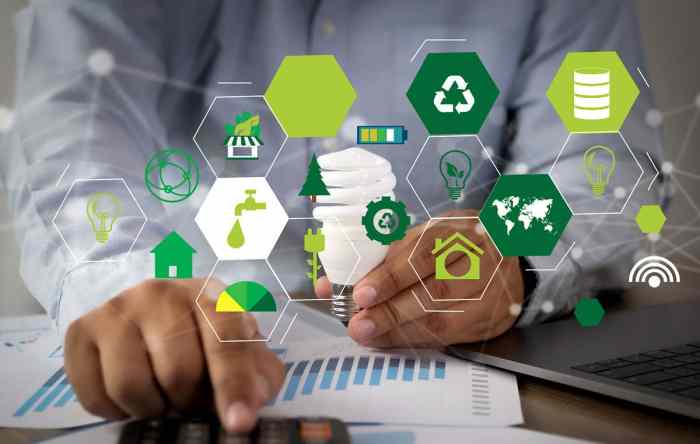
Sustainable procurement plays a pivotal role in minimizing the environmental impact of corporate facilities. By consciously choosing eco-friendly products and services throughout the entire supply chain, organizations can significantly reduce their carbon footprint, conserve resources, and promote a more sustainable built environment. This approach extends beyond simply purchasing green products; it involves a holistic strategy that considers the entire lifecycle of materials and services, from extraction and manufacturing to disposal and recycling.
The Environmental Impact Reduction Through Sustainable Procurement
Sustainable procurement directly addresses several key environmental concerns within facilities management. The selection of materials with lower embodied carbon, for example, reduces greenhouse gas emissions associated with manufacturing and transportation. Choosing products with recycled content diverts waste from landfills and conserves virgin resources. Furthermore, prioritizing products with reduced packaging minimizes waste generation and disposal costs. Implementing a robust sustainable procurement strategy leads to a demonstrable decrease in the overall environmental footprint of a facility, contributing to broader corporate sustainability goals.
For instance, a company switching to recycled paper products for printing and office use will noticeably reduce its demand for newly manufactured paper, conserving trees and lowering the energy required for production.
Criteria for Selecting Environmentally Friendly Products and Services
Selecting environmentally friendly products and services requires a multifaceted approach. Key criteria include evaluating a product’s lifecycle assessment (LCA), considering its embodied carbon, examining its recyclability and end-of-life management options, and assessing its energy efficiency during use. Certifications such as LEED (Leadership in Energy and Environmental Design) and other relevant eco-labels can serve as valuable indicators of a product’s environmental performance.
Additionally, prioritizing products made from recycled materials, renewable resources, or sustainably harvested timber demonstrates a commitment to resource conservation. For example, choosing furniture made from recycled wood reduces deforestation and lowers the energy needed for new wood production. Similarly, selecting energy-efficient lighting reduces electricity consumption and lowers operating costs.
Cost-Benefit Analysis of Sustainable versus Traditional Products
While the upfront cost of sustainable products may sometimes be higher than traditional alternatives, the long-term benefits often outweigh the initial investment. Reduced energy consumption translates to lower utility bills, while the longer lifespan of durable, sustainable products minimizes replacement costs. Moreover, many organizations can benefit from tax incentives and rebates for adopting sustainable practices. The reduced waste generation and improved recycling rates associated with sustainable products also lead to lower disposal costs.
For example, while LED lighting may have a higher initial purchase price than incandescent bulbs, their significantly longer lifespan and lower energy consumption lead to substantial cost savings over their operational life. Furthermore, companies can enhance their brand image and attract environmentally conscious customers and employees by demonstrating a commitment to sustainability.
Supplier Sustainability Performance Evaluation Checklist
A comprehensive checklist for evaluating supplier sustainability performance should encompass various aspects of their operations. This includes assessing their environmental management systems, their waste management practices, their use of renewable energy, their commitment to reducing carbon emissions, their sourcing of raw materials, and their adherence to relevant environmental regulations. The checklist could include questions such as: Does the supplier have a documented environmental policy?
What is their approach to waste reduction and recycling? What percentage of their energy comes from renewable sources? What is their carbon footprint? What is their supply chain transparency and traceability? Does the supplier hold any relevant environmental certifications?
By systematically evaluating these factors, organizations can ensure that their suppliers align with their sustainability goals and contribute to a more environmentally responsible supply chain.
The Role of Technology in Sustainable Facilities Management
Technology plays a crucial role in achieving corporate sustainability goals within facilities management. By leveraging smart building technologies and data analytics, organizations can significantly optimize energy and resource consumption, reduce operational costs, and minimize their environmental footprint. This section explores the various technological advancements that support sustainable practices within facilities.
Smart building technologies and data analytics offer powerful tools for improving the sustainability performance of facilities. These technologies enable real-time monitoring, automated control, and predictive analysis, leading to significant reductions in energy consumption, water usage, and waste generation. The integration of various systems allows for a holistic approach to sustainability, moving beyond isolated improvements to a more comprehensive and effective strategy.
Smart Building Technologies for Energy and Resource Optimization
Smart building technologies encompass a range of interconnected systems designed to optimize building performance. These systems use sensors, actuators, and sophisticated software to monitor and control various aspects of the building’s operation, from HVAC systems to lighting and security. For example, smart lighting systems can adjust lighting levels based on occupancy and natural light availability, significantly reducing energy consumption.
Similarly, intelligent HVAC systems can optimize temperature control based on occupancy patterns and weather forecasts, minimizing energy waste. Smart water management systems can detect and prevent leaks, reducing water loss and operational costs. These technologies collectively contribute to a significant reduction in a building’s environmental impact.
Data Analytics for Improved Sustainability Performance
Data analytics plays a vital role in extracting meaningful insights from the vast amounts of data generated by smart building technologies. By analyzing this data, facilities managers can identify areas for improvement in energy and resource efficiency. For instance, analyzing energy consumption patterns can reveal inefficiencies in HVAC systems or lighting, enabling targeted interventions. Analyzing water usage data can pinpoint leaks or areas of excessive consumption, allowing for prompt repairs and adjustments.
Predictive analytics can forecast future energy needs based on historical data and external factors like weather patterns, enabling proactive adjustments to optimize resource allocation. This data-driven approach ensures continuous improvement in the sustainability performance of facilities.
Software and Tools Supporting Sustainable Facilities Management
Numerous software and tools are available to support sustainable facilities management practices. Building Management Systems (BMS) provide a centralized platform for monitoring and controlling various building systems. Energy Management Systems (EMS) focus specifically on energy consumption monitoring and optimization. Sustainability reporting software helps track and report on key environmental metrics, ensuring compliance with sustainability standards and regulations.
Examples of such software include Honeywell’s Building Management System, Schneider Electric’s EcoStruxure, and IWMS platforms like Planon and Archibus, which often incorporate sustainability modules. These tools provide comprehensive data visualization and analysis capabilities, enabling facilities managers to make informed decisions to improve sustainability performance.
Implementing a Building Automation System for Energy Efficiency
Implementing a Building Automation System (BAS) requires a structured approach. The following flowchart illustrates a typical process:
Flowchart: Implementing a Building Automation System for Energy Efficiency
[Imagine a flowchart here. The flowchart would begin with “Needs Assessment & Goal Setting,” branching to “System Design & Selection,” then to “Installation & Integration,” followed by “Testing & Commissioning,” and finally “Ongoing Monitoring & Optimization.” Each step would involve sub-steps, such as defining energy efficiency targets, selecting appropriate hardware and software, integrating various building systems, conducting thorough testing, and establishing ongoing monitoring and optimization procedures.
The flowchart would visually represent the sequential and iterative nature of the implementation process.]
Measuring and Reporting on Sustainability Performance in Facilities Management
Effective measurement and reporting are crucial for demonstrating progress towards corporate sustainability goals within facilities management. Tracking key performance indicators (KPIs) allows for identifying areas of strength and weakness, informing strategic decision-making, and showcasing achievements to stakeholders. Transparent and accurate reporting builds trust and accountability, fostering a culture of continuous improvement.
Key Environmental Performance Metrics for Facilities
Several key metrics provide a comprehensive overview of a facility’s environmental impact. These metrics should be chosen based on the specific goals and priorities of the organization and the nature of its operations. Data collection should be consistent and reliable to ensure the accuracy and validity of the reporting.
| Metric | Description | Data Source | Example Target |
|---|---|---|---|
| Energy Consumption (kWh) | Total energy used by the facility, often broken down by source (electricity, gas, etc.). | Utility bills, smart meters | Reduce energy consumption by 15% within 3 years. |
| Water Consumption (gallons or cubic meters) | Total water used by the facility, including potable and non-potable water. | Water meters, utility bills | Reduce water consumption per square foot by 10% annually. |
| Waste Generation (tons or lbs) | Total waste generated, categorized by type (e.g., recyclable, compostable, landfill). | Waste audits, waste management records | Divert 75% of waste from landfills within 5 years. |
| Greenhouse Gas Emissions (metric tons of CO2e) | Total greenhouse gas emissions from energy consumption, transportation, and other sources. | Energy consumption data, emissions factors | Reduce carbon footprint by 20% by 2030. |
Preparing Sustainability Reports for Corporate Stakeholders
The process of preparing a sustainability report involves data collection, analysis, verification, and presentation. It is essential to use a standardized reporting framework, such as the Global Reporting Initiative (GRI) Standards or the Sustainability Accounting Standards Board (SASB) standards, to ensure consistency and comparability. The report should clearly communicate the organization’s sustainability performance, highlighting both successes and areas for improvement.
It should also include a description of the organization’s sustainability strategy and goals.
Importance of Transparent and Accurate Reporting on Sustainability Performance
Transparent and accurate reporting is critical for building trust with stakeholders, including investors, customers, employees, and the community. It demonstrates accountability and commitment to sustainability, enhancing the organization’s reputation and brand value. Accurate data allows for informed decision-making, enabling the organization to identify opportunities for improvement and track progress toward its sustainability goals. Inaccurate or misleading reporting can damage an organization’s credibility and lead to legal and financial consequences.
Sample Sustainability Report Template
This template provides a basic structure for a sustainability report. Specific metrics and targets will vary depending on the organization’s context and goals.
| Metric | 2021 | 2022 | 2023 (Target) |
|---|---|---|---|
| Energy Consumption (kWh) | 1,500,000 | 1,400,000 | 1,275,000 |
| Water Consumption (gallons) | 500,000 | 475,000 | 450,000 |
| Waste Diversion Rate (%) | 60% | 65% | 75% |
| Greenhouse Gas Emissions (metric tons CO2e) | 200 | 180 | 160 |
Facilities Management and its Impact on Corporate Social Responsibility (CSR)
Sustainable facilities management practices are not merely cost-saving measures; they are integral to a company’s commitment to Corporate Social Responsibility (CSR). By integrating environmental and social considerations into building operations, companies demonstrate a broader commitment to ethical and sustainable business practices, benefiting both the bottom line and their public image.Sustainable facilities management directly contributes to a company’s CSR goals by minimizing its environmental footprint.
This encompasses reducing energy consumption, water usage, waste generation, and greenhouse gas emissions. Such actions align with widely accepted CSR principles focused on environmental stewardship and responsible resource management. Furthermore, a commitment to sustainable facilities demonstrates a dedication to employee well-being and community engagement, strengthening the company’s social responsibility profile.
Sustainable Facilities and Improved Corporate Reputation
A strong commitment to sustainable facilities management significantly enhances a company’s reputation. Consumers, investors, and employees increasingly favor businesses that prioritize environmental and social responsibility. A company with demonstrably sustainable facilities projects an image of ethical leadership, innovation, and long-term vision. This positive perception can lead to increased brand loyalty, attracting and retaining top talent, and securing favorable investment opportunities.
Conversely, a lack of commitment to sustainability can damage a company’s reputation, leading to negative publicity and boycotts. For example, a company known for inefficient energy use or significant waste generation might face reputational damage, impacting its ability to attract investors or customers.
Benefits of Sustainable Facilities Management for Local Communities
Sustainable facilities management initiatives often generate positive impacts on local communities. For instance, employing local workers for building maintenance and renovation projects boosts the local economy. Investing in energy-efficient technologies can reduce the strain on local energy grids, benefiting the community as a whole. Furthermore, companies might support local charities or environmental organizations through initiatives linked to their facilities management programs.
For example, a company could donate surplus building materials to a local school or community center for renovation projects, or sponsor local tree planting initiatives to offset carbon emissions.
Communicating Sustainability Efforts to Stakeholders
Effective communication is vital for showcasing a company’s commitment to sustainable facilities management. Companies can use various channels to communicate their efforts, including: publishing sustainability reports detailing their progress and targets, showcasing case studies of successful sustainable initiatives on their website, actively engaging with stakeholders through social media, and participating in industry events and conferences to share best practices.
Transparency is key; providing verifiable data and third-party certifications enhances credibility. For instance, a company could publish an annual sustainability report verified by an independent auditor, detailing its energy consumption, waste reduction efforts, and community engagement initiatives. This transparency builds trust and strengthens the company’s reputation as a responsible corporate citizen.
Ultimately, the integration of sustainable practices within facilities management is not merely an environmental imperative; it’s a strategic business advantage. By embracing sustainable procurement, leveraging technology, and fostering a culture of environmental awareness, organizations can significantly reduce their environmental impact, enhance operational efficiency, and strengthen their commitment to corporate social responsibility. The future of sustainable facilities management lies in continuous innovation, data-driven decision-making, and a proactive approach to environmental stewardship, ultimately ensuring a more sustainable and responsible future for businesses and the planet.
User Queries
What is the return on investment (ROI) of sustainable facilities management?
While initial investments might be higher, sustainable practices often lead to long-term cost savings through reduced energy and water consumption, lower waste disposal fees, and increased operational efficiency. Improved brand reputation and attracting environmentally conscious employees also contribute to a positive ROI.
How can I measure the effectiveness of my company’s sustainable facilities management initiatives?
Key Performance Indicators (KPIs) such as energy and water consumption per square foot, waste diversion rates, and employee engagement scores can effectively track progress. Regular reporting and benchmarking against industry standards are essential for ongoing improvement.
What are some common barriers to implementing sustainable facilities management practices?
Common barriers include high upfront costs, lack of employee awareness or buy-in, limited access to sustainable products and services, and a lack of clear guidelines and accountability. Addressing these challenges requires strategic planning, employee training, and strong leadership commitment.


